
JournalSpark
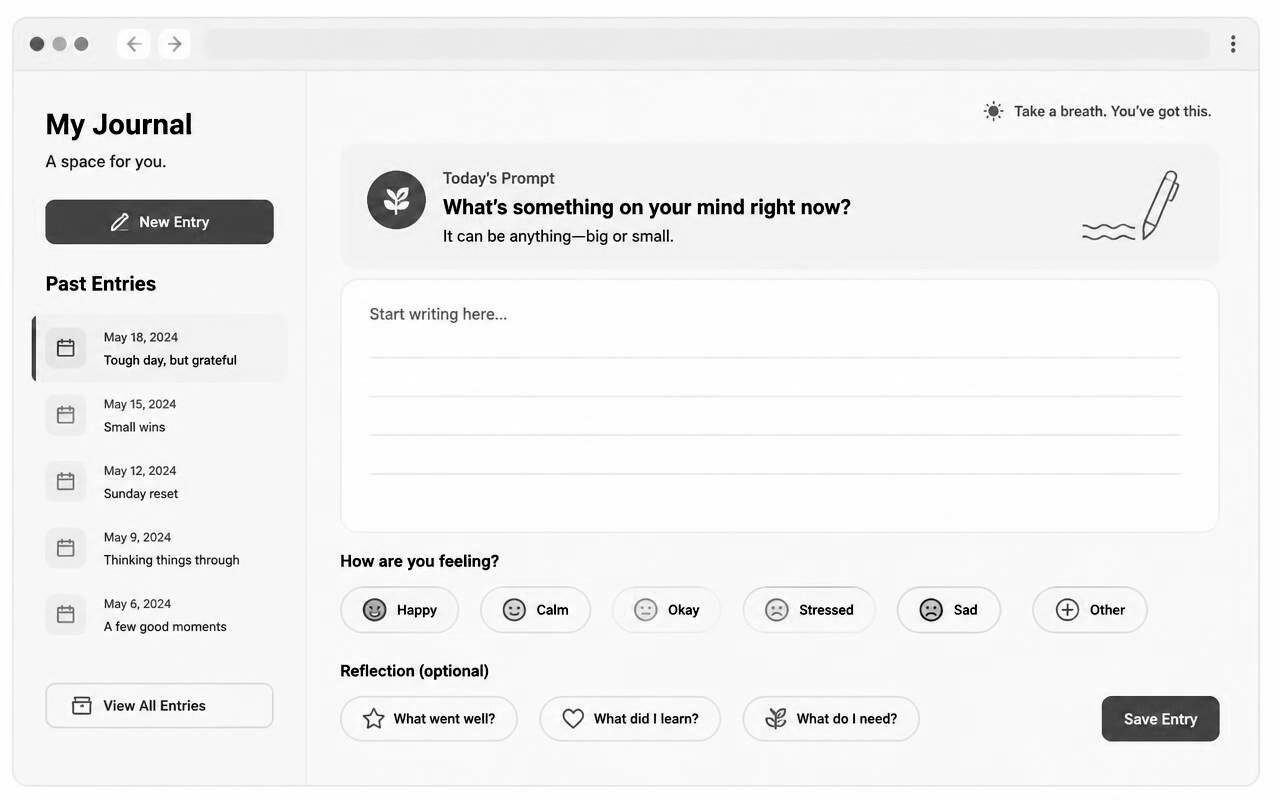
Guided digital journaling for tweens and teens.
The Challenge
Tweens and teens are asked to write reflectively at exactly the age when writing starts to feel exposed and graded. A blank page produces avoidance; a rigid template produces performance. Neither produces reflection.
The Solution
JournalSpark is designed as guided digital journaling: prompts that open a door rather than dictate an answer, space for reflection over time, and room for creative expression in the writer's own voice.
The Audience
- Tweens and teens
- Families supporting reflective writing at home
- Middle and high school educators
- Libraries and youth programs
Current Stage
Concept
A concept in development. We are looking for schools, libraries, and family partners to help shape and pilot it.
Learning & design principles
What guides the decisions.
Prompts, not assignments
An invitation produces more honest writing than a requirement.
Voice before correctness
Reflective writing develops when the writer is not being evaluated mid-thought.
Reflection over time
Value comes from looking back at earlier entries, so continuity matters.
What It Can Do
- Guided prompts across reflection and creative expression
- A private, continuous place to write
- Support for looking back across earlier entries
- Formats suited to short or extended writing
Interested in piloting or adapting this idea?
We work with partners who want to shape a tool for their own setting — a classroom, a program, a library, a course, or a family audience.
More from the studio
Related projects.
 Live site
Word Adventures USA
Location-based family literacy and learning experiences.
Connects real places with language, literacy, and inquiry so families can learn together wherever they are.
 Live site
Internship Companion
Documentation support for early childhood education interns.
A browser-based tool for tracking internship hours, documenting progress, and completing reflective journaling.
 Concept
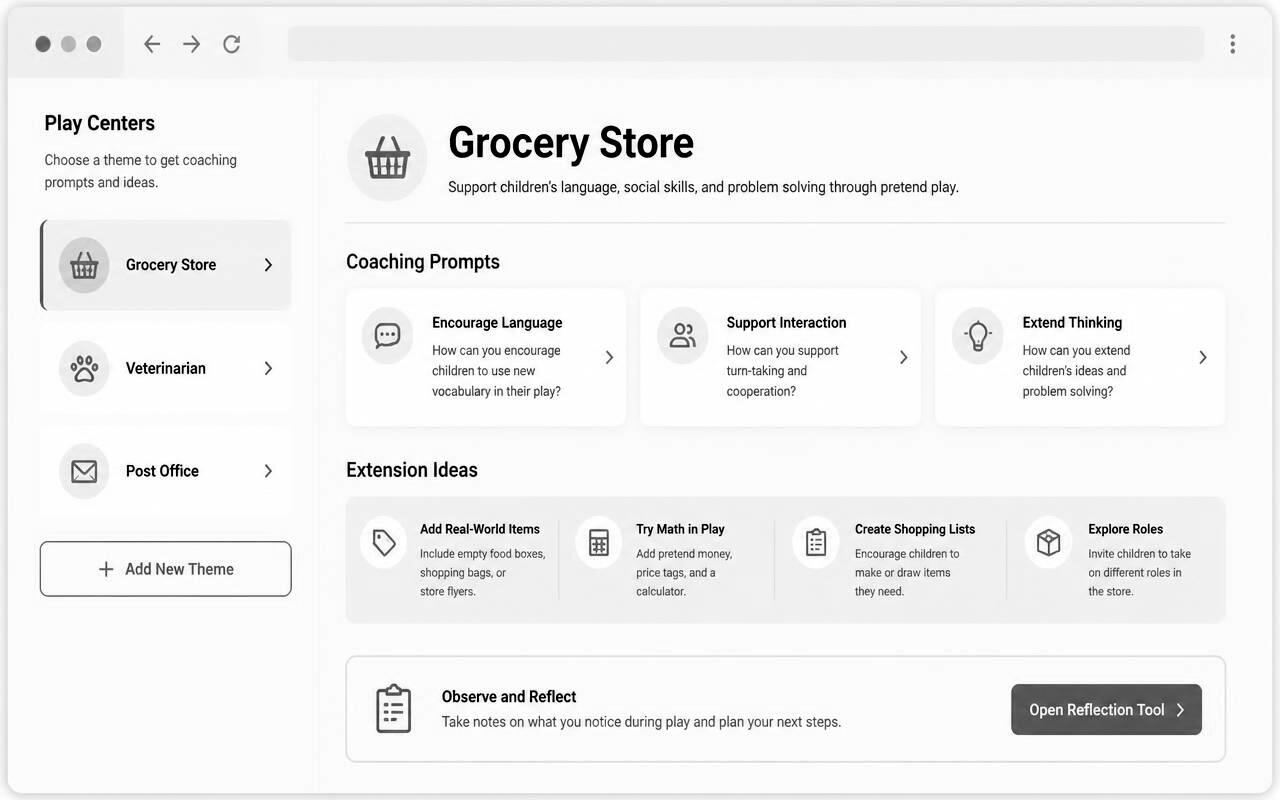
Dramatic Play Boost
Instructional coaching for language, literacy, and mathematics in play.
Concise prompts and extension ideas that help educators strengthen learning during dramatic play.