
Dramatic Play Boost
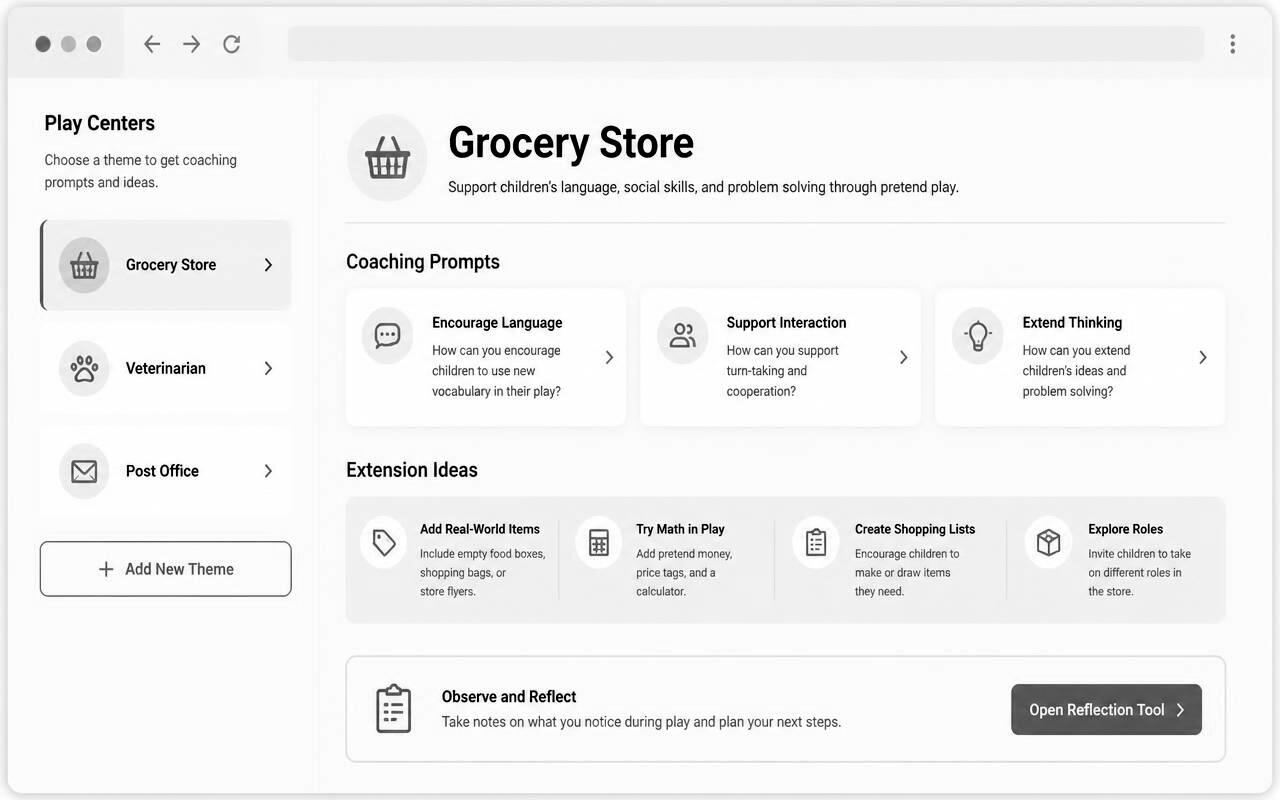
Instructional coaching for language, literacy, and mathematics in play.
The Challenge
Dramatic play is one of the richest learning contexts in an early childhood classroom, and one of the easiest to under-use. Educators are in the moment with children and rarely have a spare hand for a curriculum binder — so opportunities to extend language, literacy, and mathematics pass by.
The Solution
Dramatic Play Boost is designed as in-the-moment instructional coaching: short, concrete prompts and extension ideas an educator can use immediately inside a play scenario to strengthen language, literacy, and mathematics without interrupting the play.
The Audience
- Preschool and early elementary educators
- Early learning coaches and program leaders
- Family child care providers
- Teacher preparation programs
Current Stage
Concept
An instructional coaching concept in development. We are seeking early learning partners interested in shaping and piloting it.
Learning & design principles
What guides the decisions.
Follow the play
Extensions build on what children have already invented rather than redirecting them to an adult agenda.
Short enough to actually use
A prompt has to be readable in seconds while standing in a play area.
Coaching, not scripting
The goal is to grow educator noticing and decision-making over time.
What It Can Do
- Concise, ready-to-use prompts for common play scenarios
- Extension ideas across language, literacy, and mathematics
- Support for coaching conversations and reflection
- A format designed for use during play, not after it
Interested in piloting or adapting this idea?
We work with partners who want to shape a tool for their own setting — a classroom, a program, a library, a course, or a family audience.
More from the studio
Related projects.
 Live site
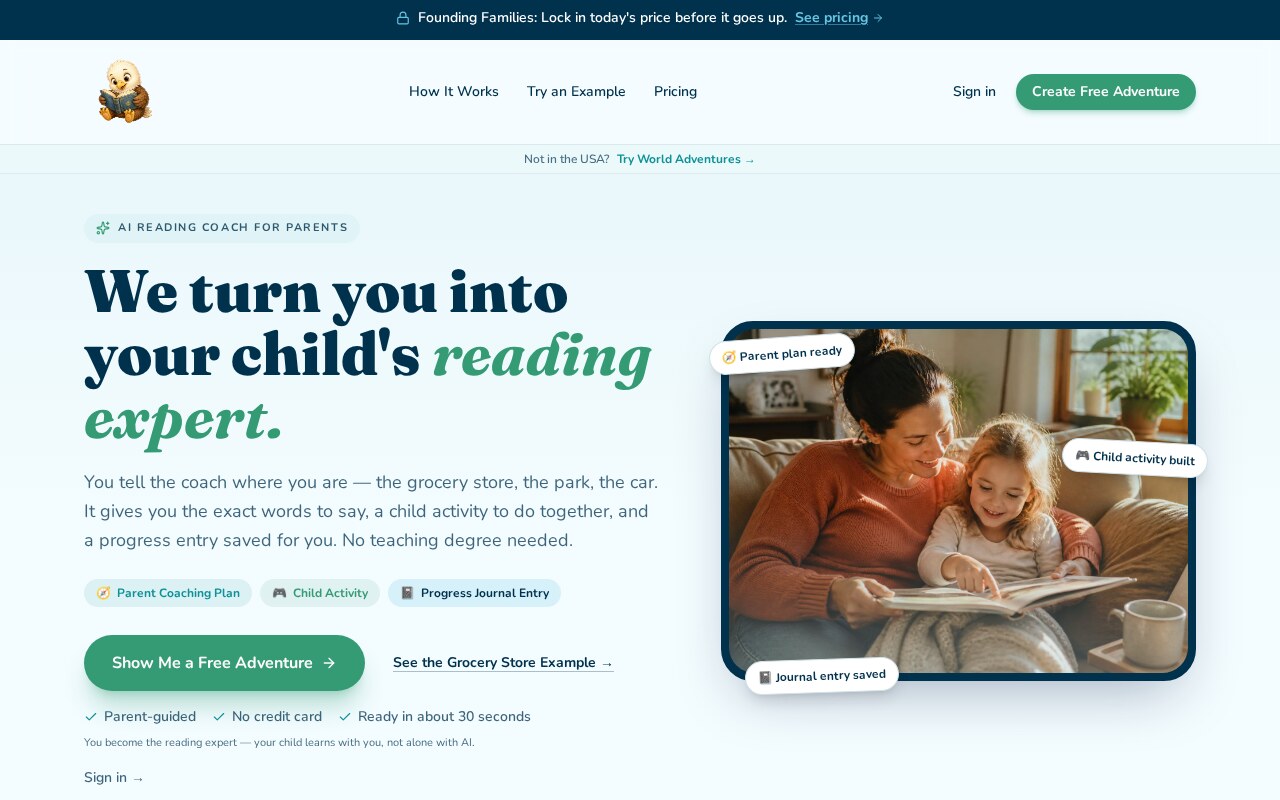
Word Adventures USA
Location-based family literacy and learning experiences.
Connects real places with language, literacy, and inquiry so families can learn together wherever they are.
 Live site
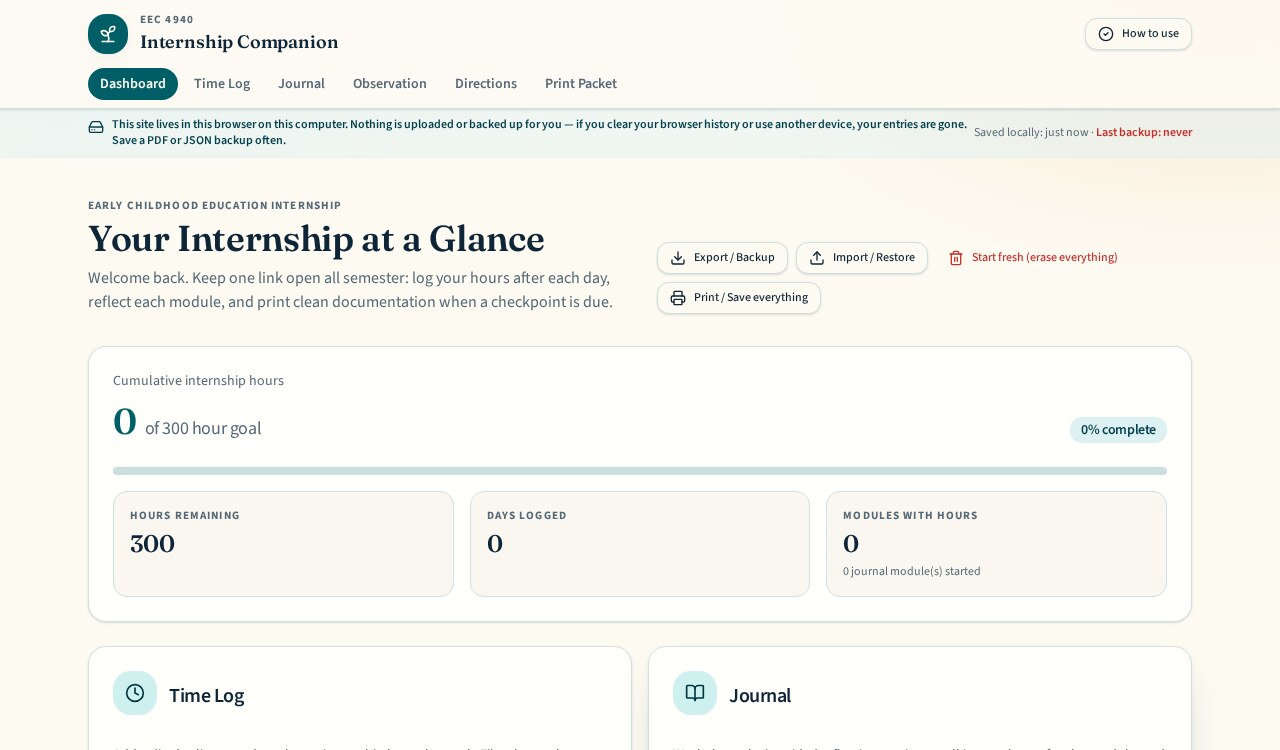
Internship Companion
Documentation support for early childhood education interns.
A browser-based tool for tracking internship hours, documenting progress, and completing reflective journaling.
 Concept
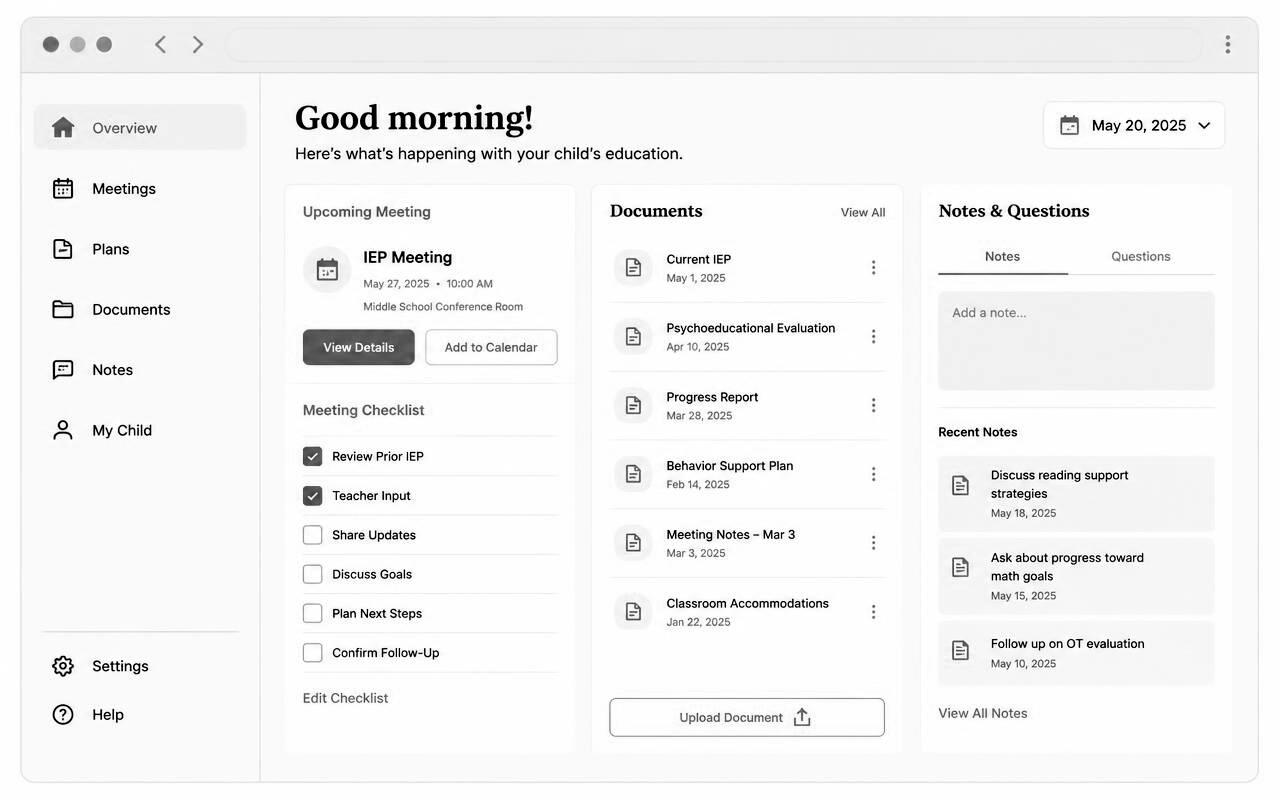
School Meeting Ready
Parent-controlled preparation for school meetings.
An organization tool for preparing for school meetings and managing educational plans, documents, and communication.